 by in
by in
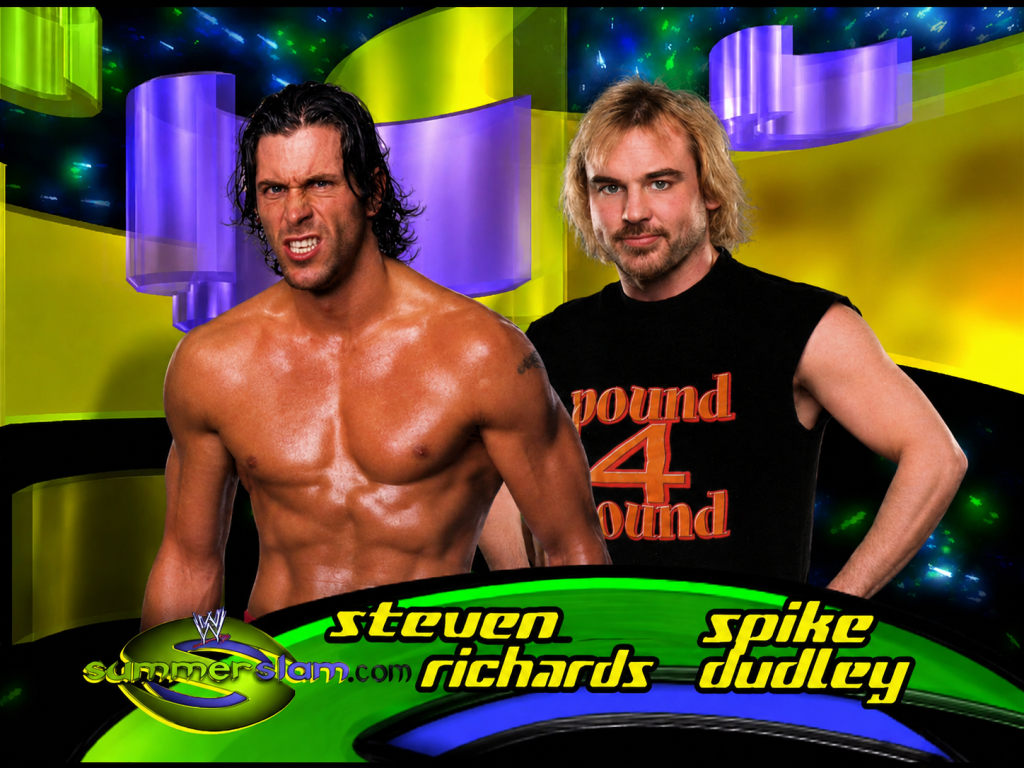
Decent reaction for both coming out, Richards garnered some quick heel heat when he flipped a young fans hat off his head during his entrance, and pulled a complete Bleeth, when he reached out to give another young fan a high five, only to smack his own back side, yelling at the kid, “I Showed You”
Richards takes control early and uses his size advantage to keep Spike grounded. Nothing complicated here, just basic offense and Richards playing the heel while Spike sells and waits for his opportunity to make a comeback.
Spike eventually starts fighting back and picks up the pace. That’s really where Spike was at his best during this period. He didn’t need to dominate a match to get the crowd behind him. His smaller size made almost everything his opponent did look painful, and once he started throwing himself around, the crowd usually responded.
Richards does a solid job working with him. He presented as a major threat here, dominating working the lower back and arms of Spike Dudley. Richards goes for the Stevie-T but its reversed.
Spike finally gets his opening and connects with the Dudley Dogg to pick up the victory. The match lasts around 8:34, so they gave them a decent amount of time.
Afterward, Richards attacks Spike Dudley after the match, hitting him with the Steven Kick followed up with the Stevie-T.
Rating: 2½ / 5
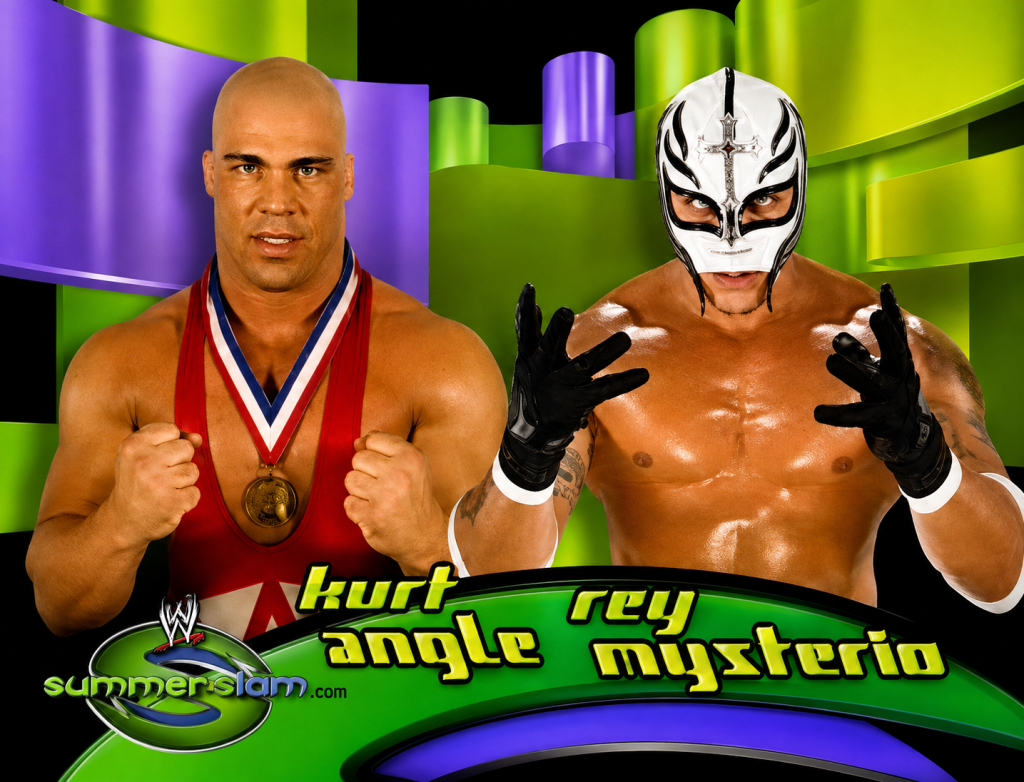
Rey Mysterio starts the match aggressively, attacking Kurt Angle from behind and quickly using his speed to gain the advantage. Rey connects with a headscissors, but Angle doesn’t stay down for long. Kurt catches him in the ankle lock early, only for Rey to escape and send Angle into the corner.
Rey goes for the 619, but Angle avoids it and pulls him to the floor. Once they get back into the ring, Angle slows the pace down with stomps, strikes, and a suplex. Rey tries to answer with a bulldog, but Angle counters it into a German suplex. Rey manages to roll him up for a two-count, but Angle quickly takes control again with a backbreaker.
One of the better moments comes when Angle catches another headscissors attempt and turns it into another backbreaker. Angle follows with a half-crab, but Rey counters into a cradle for two. Every time Rey starts building momentum, Angle finds a way to stop him.
Rey eventually creates an opening with a jawbreaker and starts using his speed again. Angle blocks a sunset flip and hits another suplex, but Rey later reverses the Angle Slam and sends Kurt to the outside. There’s also a fun moment where the referee accidentally gets in Rey’s way, so Rey simply jumps over him and continues with the move anyway.
Back inside, Rey hits a springboard leg drop for two. Angle catches him in another ankle lock, but Rey escapes and finally connects with the 619. Rey follows with the West Coast Pop, but Angle kicks out at two.
Angle deserves a lot of credit here because he makes Rey’s offense look extremely effective. He takes some big bumps and sells Rey’s speed in a way that makes Mysterio look like a serious threat throughout the match.
Rey hits a leg lariat and heads to the top rope. He avoids Angle’s attempt at a Pop-Up Superplex, but gets a little too aggressive when he tries a top-rope hurricanrana. Angle uses Rey’s momentum against him, brings him down and immediately applies the ankle lock. The finish looks a little awkward compared to how good the idea probably sounded, but it gets the job done. Rey taps out at 9:20.
Bleeth Scale: 4 / 5
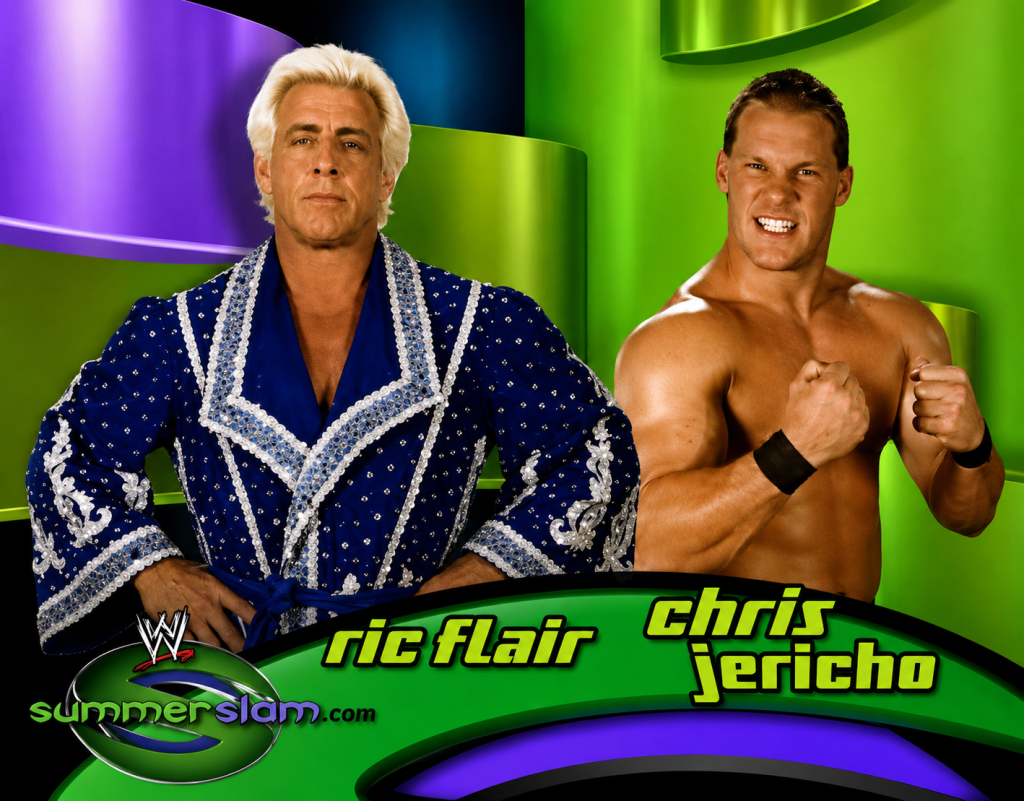
The match begins with both men attempting to outmaneuver one another before Flair takes Jericho down for an early two-count. Jericho quickly responds with strikes and a clothesline, then follows with a backdrop suplex. He attempts an elbow drop but misses, allowing Flair to answer with his trademark chops before sending Jericho to the outside.
Jericho eventually fires back, and Flair attempts his familiar turnbuckle flip but struggles to execute it cleanly. The fight spills outside, where Jericho sends Flair into the railing before bringing the action back into the ring. Jericho maintains control with strikes and a dropkick for two, then uses his wrist tape to choke Flair behind the referee’s back.
The two exchange blows, with Jericho getting the better of the confrontation. He then amusingly argues with the referee over his apparent right to choke Flair, seemingly believing his self-proclaimed status as the “King of the World” should grant him special privileges. Unfortunately for Jericho, the referee remains unconvinced.
Jericho changes tactics with a suplex before heading to the top rope, only for Flair to throw him back to the canvas. Interestingly, it is Flair using the strategy normally employed against him. Flair begins mounting his comeback with more chops and a backdrop suplex for another two-count.
Jericho reverses a suplex attempt, but Flair counters an attempted Walls of Jericho into a pinning combination for two. Jericho responds with another series of chops and sets up his bulldog, but his follow-up Lionsault misses.
Flair then applies a half-crab in what almost looks like an attempt at his own version of the Walls of Jericho. Jericho escapes and transitions into the figure-four leglock, forcing Flair to tap just as he reaches the ropes. Jericho believes he has won, but the referee rules otherwise because Flair had reached the ropes.
The confusion allows Flair to regain control. Jericho ends up crotched on the ropes, and Flair applies the figure-four leglock to force the submission at 10:23.
Bleeth Scale: 3.75 / 5
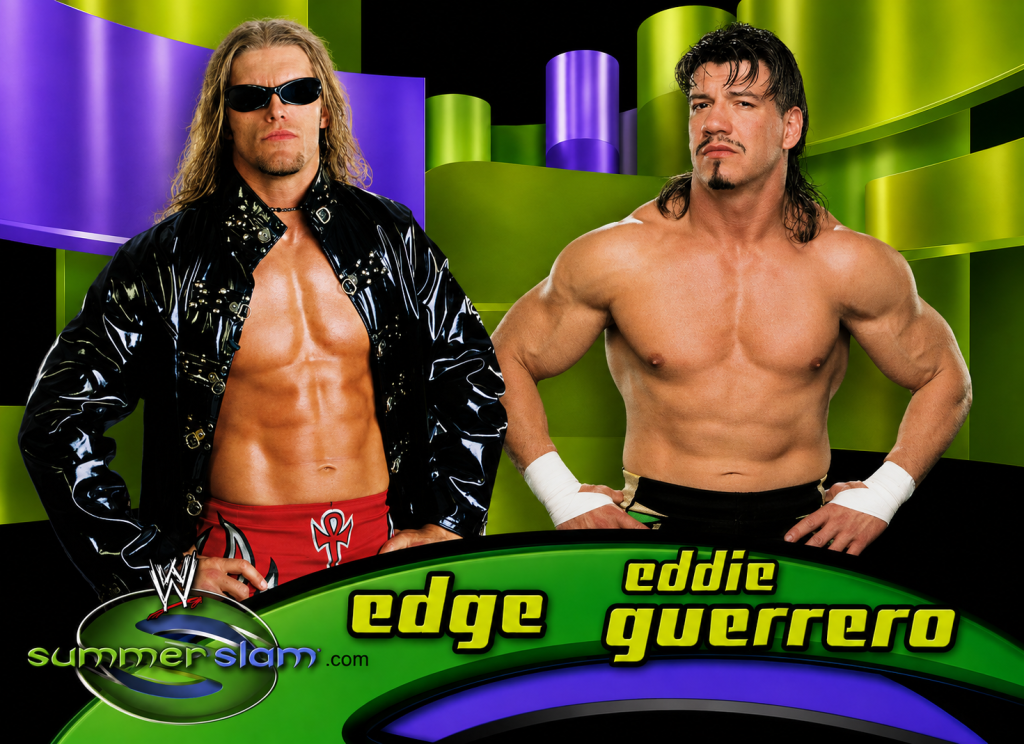
Edge and Eddie Guerrero open the match by jockeying for position before Edge gains the early advantage with a flapjack. Guerrero responds aggressively, pounding away before the two pick up the pace with a criss-cross sequence that ends with Edge hitting a slam for a two-count.
Edge maintains control, tying Guerrero up before connecting with a spear. However, he makes the classic mistake of immediately attempting the same move again, and this time Guerrero sees it coming. Edge misses badly, giving Guerrero his first real opportunity to take control.
The action spills to the outside, where Guerrero immediately begins targeting Edge’s arm and shoulder. Back inside, Guerrero continues attacking the limb with stomps before taking Edge down by the arm. A top-rope armbar takedown earns Guerrero a two-count and provides one of the most impressive sequences of the match.
Guerrero remains completely focused on the injured arm, working a hammerlock and repeatedly stomping Edge down. He transitions into a crossface chicken wing, but Edge manages to escape—only to find himself trapped in another armbar. Guerrero’s mat wrestling is excellent here, and the concentrated attack on the shoulder gives the match a strong psychological foundation.
A backdrop suplex sends Edge down directly onto the damaged shoulder, and Guerrero immediately follows with a wristlock. Edge finally creates some separation with a powerslam and attempts to build momentum. He connects with a backdrop, only to run into an elbow, but quickly recovers and hits a bulldog for two.
Guerrero is sent to the floor, and Edge follows him with a body press to the outside. Back in the ring, the two battle on the ropes, where Edge counters Guerrero’s attempted superplex into an impressive inverted powerbomb for another near fall.
Edge prepares for another spear, but Guerrero brilliantly counters with a dropkick directly to the injured shoulder. Guerrero attempts the Frog Splash but misses, allowing Edge to connect with the Implant DDT for two.
A second attempt at the DDT is countered into a Northern Lights suplex, once again driving Edge onto the damaged shoulder, for another two-count. Guerrero follows with a neckbreaker and heads upstairs for another Frog Splash, but Edge follows him to the top rope. Guerrero manages to fight him off and finally connects with the Frog Splash, deliberately landing across Edge’s injured shoulder. Somehow, Edge kicks out at two.
Then comes the finish.
Edge suddenly catches Guerrero with a spear to score the pinfall at 11:45.
Bleeth Scale: 4.25 / 5
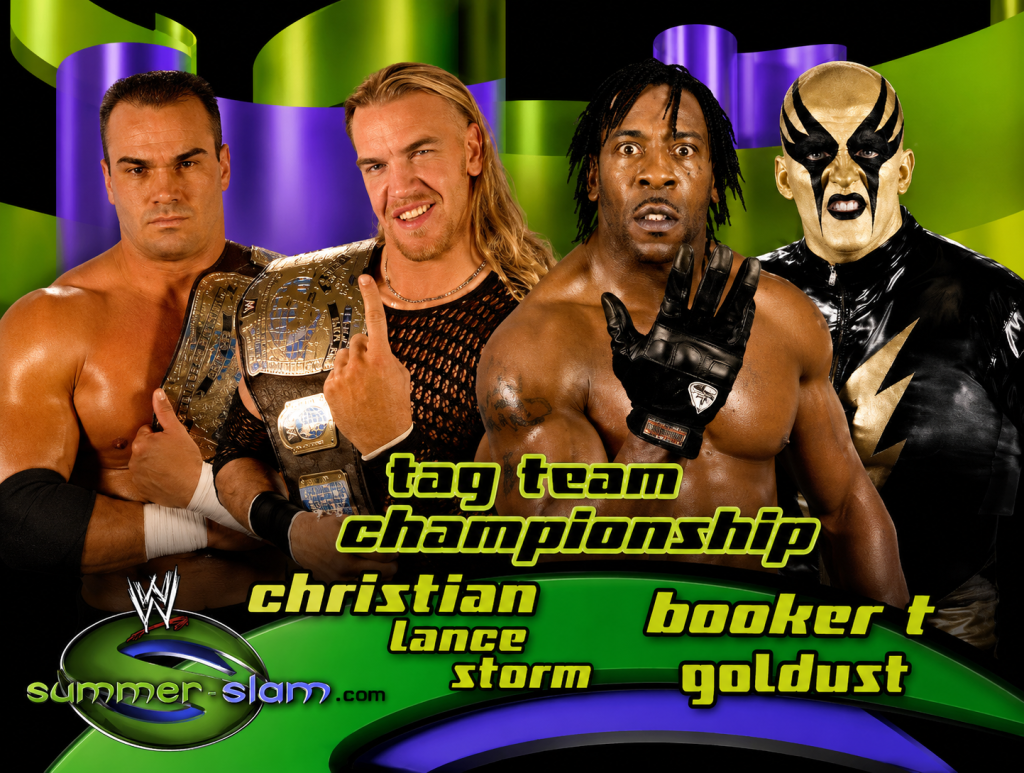
Goldust opens the match against Christian and quickly establishes control, connecting with his signature rear-end attack for a two-count. Lance Storm enters and finds himself caught in an armbar before Goldust follows with an atomic drop. Booker T tags in and keeps the momentum going with an elbow and a side slam, followed by a knee drop for another two-count.
Goldust returns, but a well-timed cheap shot allows the champions to take control. From there, Christian and Storm settle into their heel offense, isolating Goldust and preventing him from reaching Booker.
The commentary surrounding the champions’ anti-American gimmick is somewhat awkward. Rather than developing Christian and Storm as distinct personalities, much of their heel presentation revolves around the simple fact that they are Canadian and openly hostile toward the United States. Even their hometown introductions have essentially been reduced to “Canada.” It makes for an unusually generic presentation, especially considering how entertaining both men can be when given stronger material.
Back in the ring, Christian chokes Goldust before hitting a backbreaker for two. Goldust has now firmly assumed the role of the isolated babyface, absorbing punishment while Booker waits for an opportunity to enter the match.
Goldust briefly creates an opening by rolling up Storm for two, but Christian cuts him off before he can make the tag. A false-tag sequence follows, allowing the champions to continue working over Goldust while the referee sends Booker back to the apron.
Goldust eventually fights his way back into contention and catches Christian with a cradle for another two-count. The two collide shortly afterward, seemingly giving Goldust the opening he needs. Storm, however, cleverly draws Booker into the ring, distracting the referee and preventing him from seeing Goldust make the tag. It is a smart piece of traditional tag-team psychology and one of the better moments of the match.
The champions attempt their double-team Concerto, but it misses, finally allowing Goldust to make the hot tag.
Booker explodes into the match, unloading on Christian before connecting with a forearm and a missile dropkick for two. A flapjack follows, but the referee gets caught in the action and goes down.
With no referee available, Booker hits both champions with the scissors kick and celebrates with the Spinarooni. Unfortunately, taking the time to celebrate proves costly.
Test suddenly runs down and catches Booker with a devastating big boot. Christian takes advantage of the interference, covering Booker for the pinfall at 9:36 to retain the World Tag Team Championship.
Time: 10:40
Bleeth Scale: 2.5 / 5
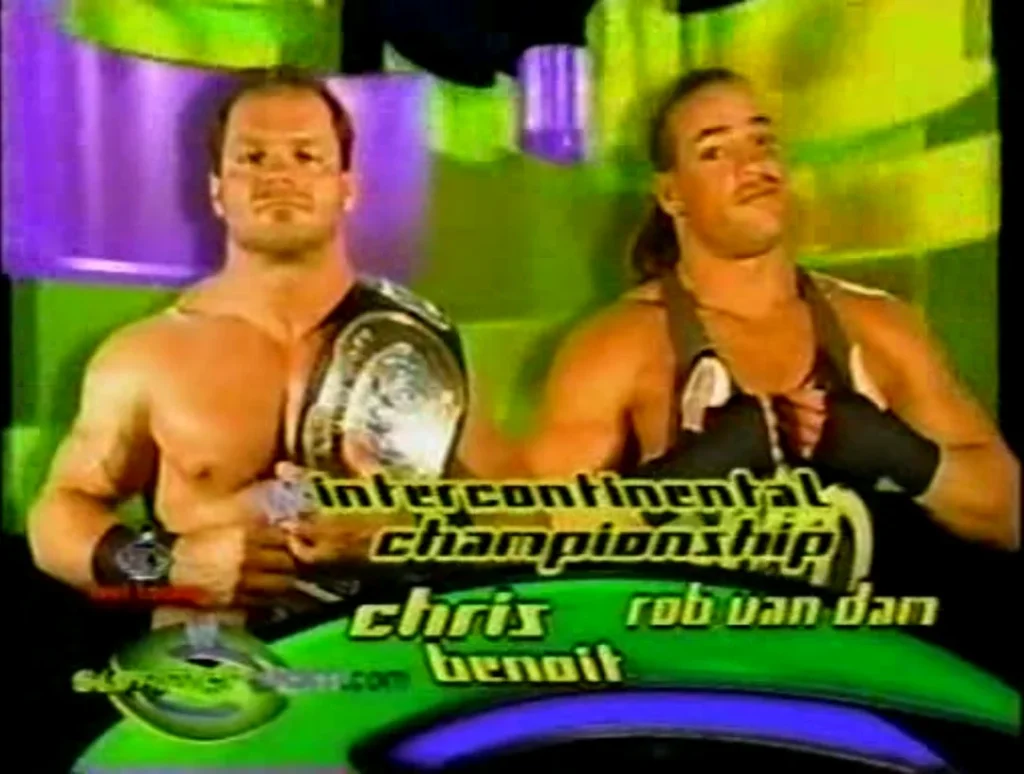
Van Dam immediately attacks with his kicks, forcing Benoit to retreat to the floor. Back inside, Benoit slows the pace and takes Van Dam down into a headlock. He misses a charge, however, allowing Van Dam to connect with a crossbody for two.
A German suplex quickly changes the complexion of the match.
Benoit begins targeting Van Dam’s neck and upper body, connecting with a short-arm clothesline, backbreaker and snap suplex, each producing a two-count. He follows with a standing armbar and uses elbows to keep Van Dam grounded, although Van Dam manages to surprise him with a cradle for two.
Van Dam attempts a monkey flip, but Benoit shuts him down and unloads with chops. Van Dam heads upstairs and misses a moonsault, while Benoit subsequently misses his diving headbutt.
Van Dam then misses the Five-Star Frog Splash, giving Benoit his first opportunity to apply the Crossface.
This is where the primary weakness of the match begins to emerge.
Benoit is constructing an extremely logical match around systematically damaging Van Dam’s arm, but Van Dam does not always sell the injury with enough urgency. The Crossface should feel like a desperate struggle for survival, yet Van Dam’s reaction occasionally makes the submission feel far less dangerous than Benoit’s offense suggests it should be.
Van Dam reaches the ropes, but Benoit immediately returns to the attack. Van Dam attempts another quick move from the ropes and instead gets thrown into the ringside barricade and then the post.
Back inside, Benoit connects with a shoulderbreaker and continues attacking the arm. The psychology is becoming increasingly clear: Benoit wants to destroy the shoulder and arm so that Van Dam becomes increasingly vulnerable to the Crossface.
Benoit transitions into a surfboard before Van Dam powers his way free. Even then, Benoit maintains control of the wrists and converts the position into a straitjacket choke. Van Dam escapes, only for Benoit to take him down again.
This is where the match is at its best.
There is very little wasted motion. Benoit attacks, Van Dam counters, Benoit adjusts, and another counter follows. Rather than simply moving from one signature maneuver to another, the match develops through wrestling exchanges in which both competitors are constantly searching for an advantage.
Van Dam finally scores his own takedown and attempts Rolling Thunder, but Benoit counters directly into another Crossface attempt.
Again, however, Van Dam’s selling prevents the sequence from reaching its full potential. Benoit has spent considerable time establishing the arm as the central story of the match, yet Van Dam never quite conveys the desperation necessary to make the audience believe the injury could cost him the championship.
Van Dam attempts to counter, but Benoit counters the counter into a cradle for two before sending him shoulder-first into the ring post.
Benoit then returns to the hammerlock and produces one of the strongest sequences of the match, transitioning into a series of rolling Northern Lights suplexes while deliberately driving Van Dam onto the injured arm. Everything leads naturally into another attempt at the Crossface.
Van Dam reaches for the ropes, but Benoit intelligently grabs his free arm and positions himself between Van Dam and the ropes, eliminating the obvious escape route. He then bridges backward into a dragon sleeper.
It is excellent submission wrestling and demonstrates Benoit’s greatest contribution to the match: nearly everything he does has a purpose.
Van Dam eventually reverses into his own variation of the Crossface, but Benoit escapes and immediately dropkicks the damaged arm.
Van Dam finally begins mounting his comeback with a springboard dropkick for two. A spinning kick follows, and Rolling Thunder earns another near fall. He connects with another spinning kick for two before heading to the top rope.
Benoit catches him and attempts a superplex. Van Dam manages to reverse his position in midair, leaving both men down.
Van Dam recovers first, climbs to the top rope and connects with the Five-Star Frog Splash to win the Intercontinental Championship at 16:29.
Winner: Rob Van Dam
Time: 16:29
Result: Van Dam wins the Intercontinental Championship
Bleeth Scale: 5/5
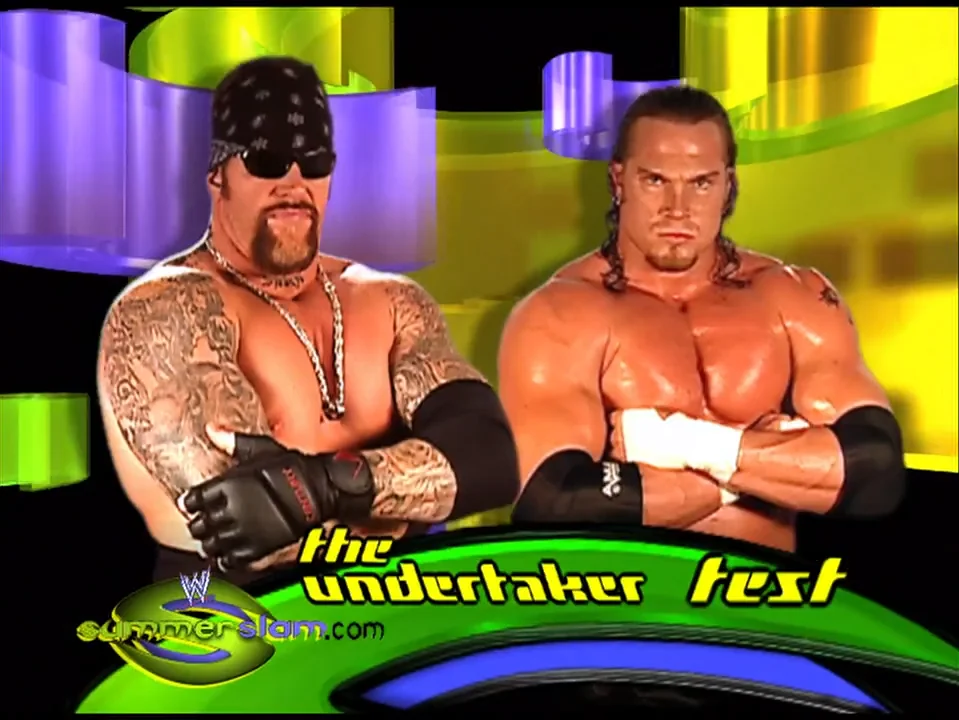
Test establishes his power advantage early, overpowering The Undertaker in the opening exchanges. Undertaker responds by targeting the arm before connecting with a clothesline for a two-count.
Undertaker attempts his signature ropewalk, but Test counters by knocking him off balance and crotching him on the ropes. The fight quickly spills to the outside, where the two exchange blows before returning to the ring.
Test takes control and begins choking Undertaker before connecting with a corner clothesline. He then settles into an armbar, although the hold feels somewhat out of place. There has been little work done to Undertaker’s arm, and Test makes no real attempt to establish it as part of a larger strategy.
That is one of the problems with trying to incorporate more submission-based wrestling into WWE matches. Holds are far more effective when they have a purpose. If an armbar is simply inserted as a way to slow the pace rather than exploit an established injury, it becomes an obvious rest hold rather than something the audience should believe could actually end the match.
Undertaker eventually escapes and connects with a backdrop suplex, but Test responds with another series of strikes. Unfortunately, much of the match consists of the two trading punches without developing much momentum or urgency.
Undertaker finally creates some separation with a DDT for two.
He follows by successfully completing the ropewalk and connects with Snake Eyes. Undertaker attempts a chokeslam, but Test blocks it. A second attempt is successful, seemingly putting Test in serious trouble.
At that point, Christian and Lance Storm interfere on behalf of their fellow Un-American.
Despite the blatant interference, the referee does not call for the disqualification. Undertaker instead fights off all three members of the group himself, effectively neutralizing the advantage.
With Christian and Storm dispatched, Undertaker turns his attention back to Test, delivers the Tombstone Piledriver and scores the pinfall at 8:18.
The match never really develops beyond a basic power-based brawl. There are occasional attempts to introduce more traditional wrestling, but moves such as Test’s armbar lack the necessary setup to give them any psychological significance.
The interference also accomplishes very little. Rather than making The Un-Americans appear dangerous as a group, Undertaker simply fights off all three men before finishing Test moments later. By the end, Test almost feels secondary to Undertaker disposing of the entire faction.
At just over eight minutes, the match does not overstay its welcome, but there is very little here that stands out. Undertaker provides the recognizable offense, Test supplies the power, and the inevitable interference gives the match its finish. Beyond that, it is a fairly ordinary encounter that never develops enough intensity to become particularly memorable.
Winner: The Undertaker
Time: 8:18
Bleeth Scale: 1 / 5
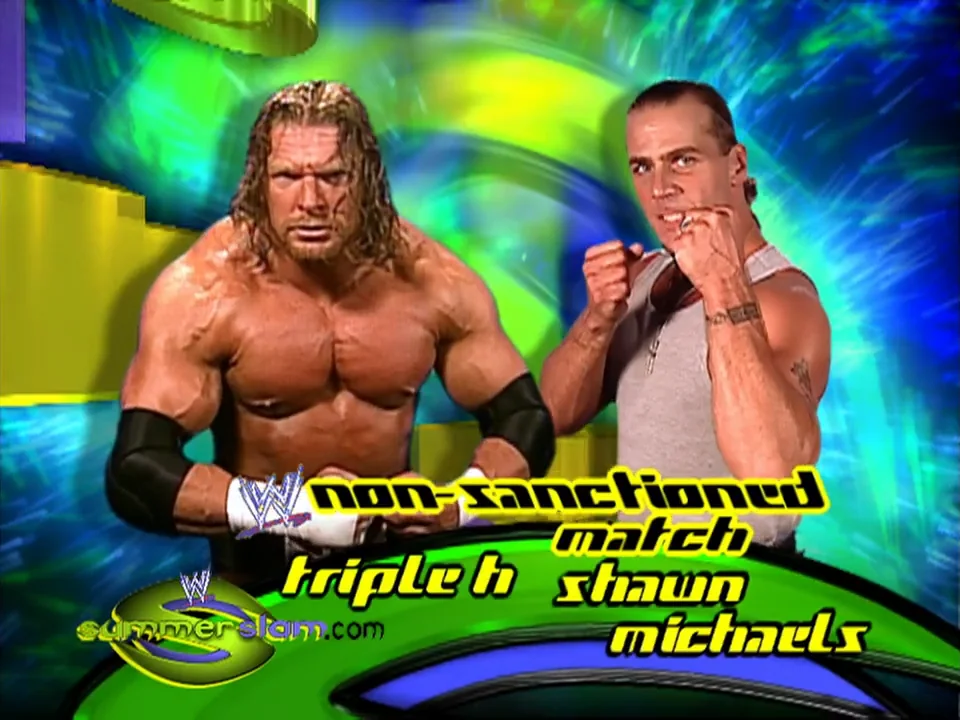
Shawn Michaels enters wearing an outfit reminiscent of his mid-1990s look, an appropriate visual considering this is his first major match in more than four years. Triple H also looks somewhat different, arriving clean-shaven and giving both men an appearance that recalls an earlier period in their careers.
Once the bell rings, however, there is very little nostalgia involved.
They immediately exchange punches, with Michaels gaining the advantage and sending Triple H to the floor. Michaels follows with a pescado before the fight moves back toward the ring, with Triple H attempting to create some distance along the way.
Michaels finds a garbage can, but Triple H cuts him off and sends him into the ringside barricade. Back inside, Michaels answers with a clothesline and follows with a double axehandle from the top rope.
Michaels attempts Sweet Chin Music, but Triple H avoids it and immediately attacks the most obvious target available: Shawn’s back.
Triple H connects with a vicious backbreaker and then delivers another.
The psychology could hardly be more straightforward. Michaels’ serious back injury forced him away from full-time competition, and the audience is completely aware of that history. As a result, Triple H does not need an extended sequence to establish the back as a weakness. Every time Michaels lands awkwardly or absorbs punishment to that area, there is an immediate sense that his career could once again be in jeopardy.
Triple H sends Michaels hard into the corner and continues beating him down. An elbow directly to the back earns a two-count.
He then introduces a steel chair and drives it across Michaels’ back for another near fall.
Michaels briefly counters a suplex into a pinning combination for two, but Triple H quickly regains control with a facebuster before delivering a DDT onto the chair for another two-count.
Triple H continues humiliating his former friend, even using Michaels’ own belt as a weapon. He eventually searches underneath the ring and retrieves his familiar sledgehammer, but Michaels manages to stop him before he can use it.
Triple H instead applies an abdominal stretch, continuing to place pressure on Michaels’ damaged back. He attempts to gain additional leverage from the ropes, leading to an argument with referee Earl Hebner. Given that this is an unsanctioned street fight with essentially no rules, the referee’s objection is somewhat amusing, but the focus remains firmly on Triple H’s strategy.
The match becomes increasingly brutal from there.
Michaels is caught on the ropes and left hanging upside down. Triple H positions a chair in the ring and drops Michaels back-first across it in an especially vicious spot considering Michaels’ injury history.
A side slam onto the chair earns another two-count.
Triple H attempts the Pedigree, but Michaels desperately counters with a low blow. Triple H recovers and approaches with the chair, only for Michaels to connect with Sweet Chin Music, sending the chair directly back into Triple H’s face.
Triple H is busted open, and the entire complexion of the match changes.
Michaels begins his comeback with his signature flying forearm. Then comes the moment the crowd has been waiting for: Michaels springs back to his feet with the kip-up.
After years away from the ring, Shawn Michaels suddenly looks like Shawn Michaels again.
He unloads on Triple H with a chair, sends him outside and continues the assault with his belt. Michaels then introduces a ladder and drives it into Triple H before catapulting him directly into it for a two-count.
Triple H manages to respond with a baseball slide that sends the ladder back into Michaels, and the action returns to the ring.
Michaels connects with a superplex for two and follows with a sunset flip for another near fall. Triple H answers with his high knee for two.
Triple H retrieves the steel ring steps, but the plan backfires and Michaels sends him back to the floor.
A table is brought into play.
Triple H ends up stretched across it, and Michaels climbs above him before launching himself through Triple H and the table with a spectacular splash.
Considering Michaels’ history of back problems and the amount of punishment he has already absorbed, the spot carries considerably more weight than it normally would.
Back inside, Michaels sets up the ladder and climbs to the top. He launches himself with his trademark flying elbow and connects.
Now the crowd knows what is coming.
Michaels moves to the corner and begins tuning up the band.
He charges for Sweet Chin Music, but Triple H avoids it and attempts the Pedigree. Michaels counters at the last possible moment, turning the move into a pinning combination and scoring the victory at 27:23.
It is not the definitive clean victory that Sweet Chin Music might have provided, but the result accomplishes what matters most: after more than four years away from major competition, Shawn Michaels has proven that he can still perform at an elite level.
The match succeeds because the story requires almost no explanation. Triple H knows Michaels’ greatest physical weakness and spends the first half of the match ruthlessly exploiting it. Every chair shot, backbreaker and slam carries additional significance because the audience understands Michaels’ history.
Then, once Michaels survives the punishment, the match transforms into a comeback story.
The flying forearm, kip-up, elbow drop and attempted Sweet Chin Music are more than familiar signature moves. They gradually demonstrate that the Shawn Michaels the audience remembers is still there.
The weapons and increasingly dangerous spots also fit the personal nature of the rivalry. This is not presented as two wrestlers competing for a championship. It is two former best friends attempting to hurt one another after months of betrayal and resentment.
After the match, Triple H makes sure the rivalry is far from finished.
As Michaels celebrates, Triple H attacks him from behind and drives the sledgehammer into his already damaged back. Michaels is eventually removed on a stretcher, allowing Triple H to reclaim the final moment even though he lost the match.
It is an effective conclusion because Michaels wins the battle without completely defeating his former friend. Triple H remains dangerous, Michaels remains vulnerable, and the rivalry has an obvious reason to continue.
For Michaels, though, the larger story is his performance itself. After four years away from this level of competition, there were legitimate questions about whether his body could withstand a lengthy match or whether he could still perform anywhere near his previous standard.
Winner: Shawn Michaels
Time: 27:23
Bleeth Scale: 4.75 / 5
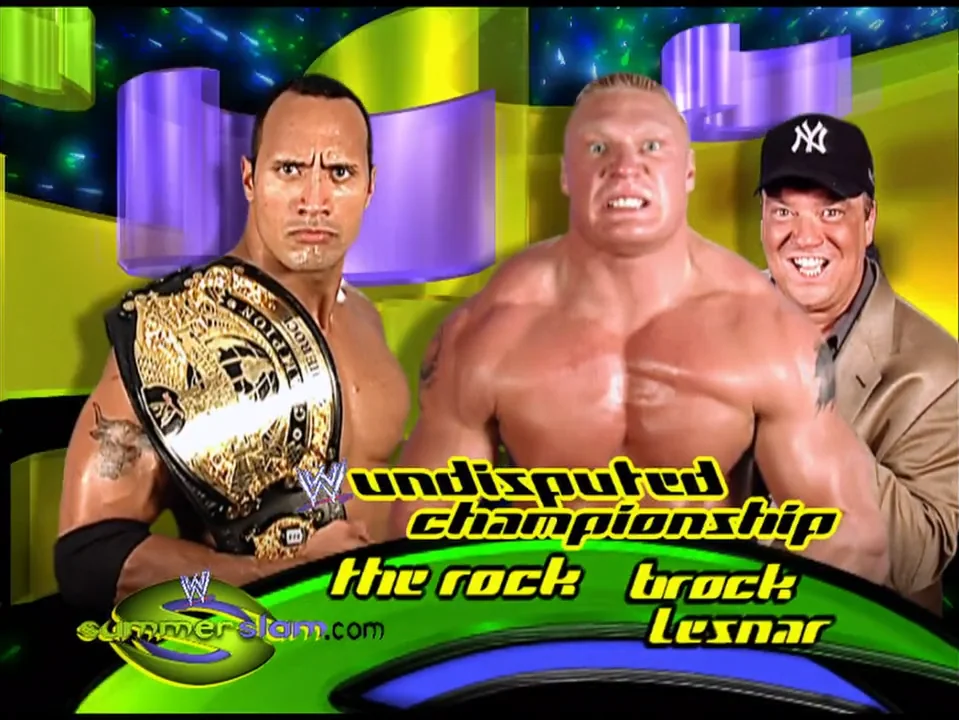
From the moment Brock Lesnar arrived in WWE, it was obvious the company had enormous plans for him. What is remarkable is just how quickly those plans materialized. Less than six months after his debut, Lesnar finds himself in the main event of SummerSlam challenging The Rock for the WWE Undisputed Championship.
The story could not be much simpler: the established megastar against the seemingly unstoppable newcomer.
And perhaps most importantly, WWE treats Lesnar like he belongs there.
Paul Heyman handles much of the pre-match promotion, presenting Lesnar not as an inexperienced rookie fortunate enough to receive a championship opportunity, but as a legitimate threat capable of destroying the biggest star in the company. After winning the King of the Ring tournament and running through much of the roster, Lesnar arrives at SummerSlam with tremendous momentum.
The atmosphere is fascinating because the Long Island crowd is far more receptive to Lesnar than WWE might have anticipated. The Rock, despite entering as the defending champion and nominal babyface, receives a noticeable amount of hostility. Rather than fighting against the reaction, both wrestlers gradually embrace it.
Once the bell rings, Lesnar immediately demonstrates that he can physically compete with The Rock.
Rock tries to establish control early, but Lesnar’s combination of strength and explosiveness makes that difficult. The challenger repeatedly overwhelms the champion, while Rock has to rely on his experience and speed to create openings.
That dynamic becomes the foundation of the match.
Lesnar does not wrestle like an inexperienced challenger attempting to survive against the champion. He wrestles like someone who fully expects to win.
His offense is simple but convincing. Rather than overwhelming the match with unnecessary moves, Lesnar relies on power, suplexes and physicality. Everything is designed to reinforce the idea that Rock has encountered an opponent who may simply be stronger and more dangerous than he is.
Heyman also plays his role perfectly from ringside.
Rock eventually gets his hands on him and sends Heyman through the announce table with a Rock Bottom, temporarily removing Lesnar’s greatest outside advantage. It also gives Rock a significant momentum shift heading into the closing stretch.
Back inside, the match begins moving toward the familiar Rock formula.
Rock connects with the spinebuster and prepares for the People’s Elbow, but Lesnar refuses to cooperate with the expected ending. The challenger recovers, and suddenly Rock’s usual finishing sequence is no longer enough to guarantee victory.
That is where the match becomes particularly effective.
The audience has seen The Rock survive countless challenges, but Lesnar is presented differently. He does not feel like another opponent waiting to be defeated after Rock completes his comeback. Every time Rock appears ready to take control, Lesnar finds another way to stop him.
The closing sequence is excellent.
Rock attempts the Rock Bottom, but Lesnar counters. Lesnar looks for the F-5, only for Rock to escape and continue fighting. The reversals create the impression that both men understand exactly how dangerous the other’s finishing move is.
Eventually, Rock attempts another Rock Bottom.
Lesnar counter, hits F-5 and wins, his first championship.
At 15:49, Brock Lesnar defeats The Rock cleanly to become the new WWE Undisputed Champion
Winner: Brock Lesnar
Time: 15:49
Result: Lesnar wins the WWE Undisputed Championship
Bleeth Scale: 5 / 5


